
>
>
>
>
What separates unforgettable experiences from forgettable ones
...
...
What separates unforgettable experiences from forgettable ones
What separates unforgettable experiences from forgettable ones

People want to be in the room when big things are happening. And the numbers back it up.
More than half of event organisers reported increased attendance in 2025 – a meaningful rise from 44% who said the same in 2023 – and 80% of professionals now rate in-person events as their most trusted source of information. The live events that resonate most share one thing: they make people feel part of something bigger. That appetite for connection and shared meaning is just as present inside organisations as it is outside them.
And yet it’s surprisingly easy to spend serious money on a flagship event – impressive venue, slick production, packed agenda – only to find that six weeks later, nothing has shifted. No new behaviours, no change in belief, nothing. People enjoyed it, sure. But they didn’t feel changed by it, or inspired to do something differently. The event was just a moment in time that came and went, without any lasting impact on behaviour.
The culprit is usually the same: the experience was designed before the story was fully understood.
And that’s no surprise. Most event briefs start with format. How many days. What kind of venue. In-person or hybrid. These are all legitimate questions, and they tend to come early because they feel concrete and actionable. The harder work, however, is getting clear on what you need people to think, feel or do differently – and why that matters to them right now. That often comes later. Sometimes too late. Which means every decision that follows is built on shaky foundations.
Always start with the shift
Stories work because they give people something to connect to, remember and carry forward. Facts alone rarely do that.
According to a Stanford study, we only retain around 5% of information delivered as facts. But told as a story, that rises to 63%.
This matters most when the stakes are high:
A new strategy that needs more than a town hall announcement
A merger bringing two cultures together and asking people to genuinely believe in something new
A business entering a new market and needing customers, partners and prospects to believe in the opportunity
A leadership change where trust needs rebuilding before anything else can happen
A business asking its people to work, think and show up differently
A shift in industry thinking where brands need a platform to lead the conversation, not just join it
An organisation bringing customers and partners together to build advocacy, trust and momentum.
These are the moments organisations turn to live experiences in – and rightly so. Because when people feel something together, it accelerates understanding, alignment and action in a way few other channels can. But an experience can only do that work if it’s designed around a story specific enough to meet people where they actually are. Generic inspiration isn’t enough anymore. People can feel the difference between an event made for them and one built from a template. To cut through now, experiences have to hit different.
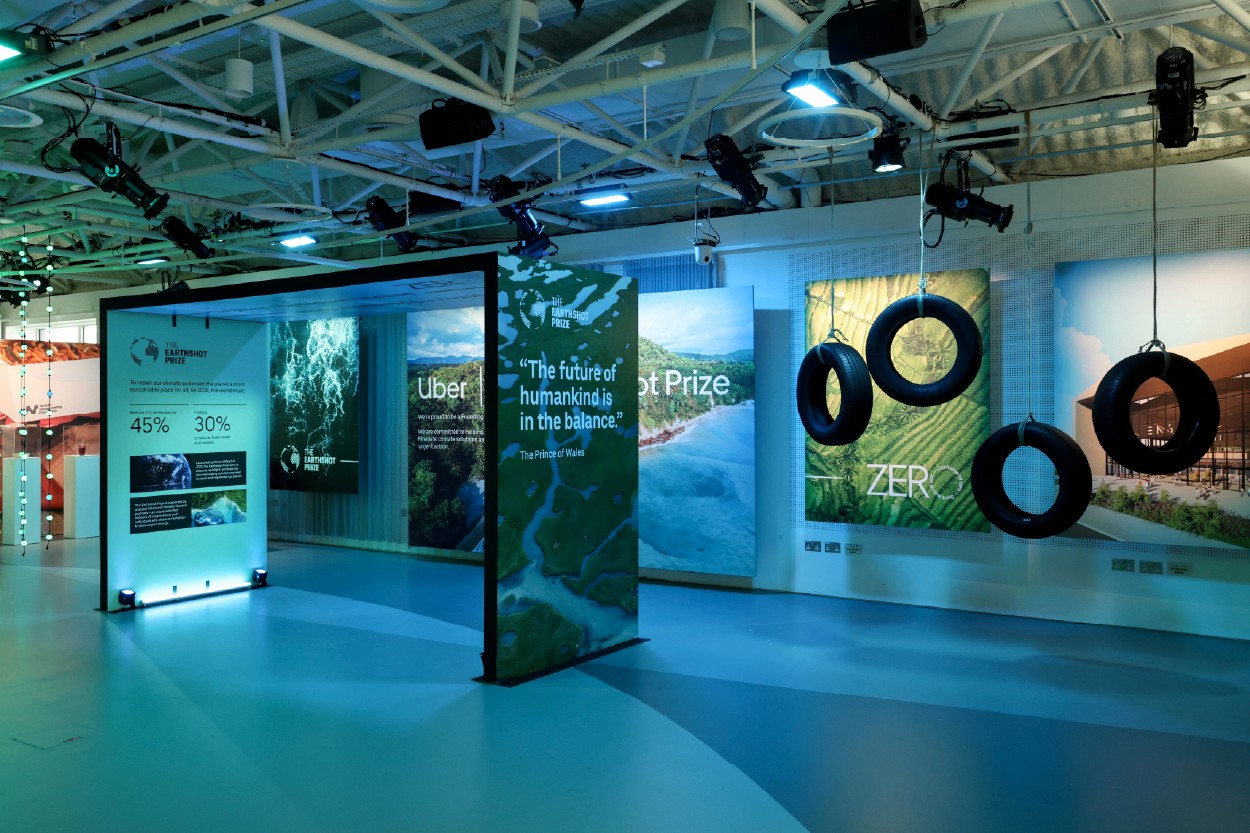
Story-first might mean answering some uncomfortable questions before the brief is written. What do we need people to do differently after leaving the room? What is the one thing this experience, at this particular moment in time, uniquely needs to do? Why does this matter now? And could this event belong to any other organisation, or does it only make sense for ours? If the honest answer is the former, the story probably isn’t clear enough yet.
The impact of putting story before format
We've seen this play out across very different briefs. Take a financial services business whose leadership summit had become expected. With a new leadership team in place, we rebuilt the event from the story up– focusing on what audiences needed to hear and designing formats that created real dialogue. We saw the same result in a global recognition event, bringing together award winners and senior leaders from 14 countries. The point wasn’t just to celebrate brilliant performance, but to connect individual contribution to wider business success. So, the experience was built around that story first, then brought to life through the agenda, speaker moments, local culture and a shared sense of pride that could travel back into the business.
Because the story is usually already there – in the direction a business is heading, the change it’s asking people to make and the future it’s trying to build. The real work is creating an experience that helps people connect to it in a way that feels meaningful, memorable and worth showing up for. That’s what turns an event into something people carry forward long after the stage lights fade out. That’s the shift in thinking that makes an experience unforgettable.
People want to be in the room when big things are happening. And the numbers back it up.
More than half of event organisers reported increased attendance in 2025 – a meaningful rise from 44% who said the same in 2023 – and 80% of professionals now rate in-person events as their most trusted source of information. The live events that resonate most share one thing: they make people feel part of something bigger. That appetite for connection and shared meaning is just as present inside organisations as it is outside them.
And yet it’s surprisingly easy to spend serious money on a flagship event – impressive venue, slick production, packed agenda – only to find that six weeks later, nothing has shifted. No new behaviours, no change in belief, nothing. People enjoyed it, sure. But they didn’t feel changed by it, or inspired to do something differently. The event was just a moment in time that came and went, without any lasting impact on behaviour.
The culprit is usually the same: the experience was designed before the story was fully understood.
And that’s no surprise. Most event briefs start with format. How many days. What kind of venue. In-person or hybrid. These are all legitimate questions, and they tend to come early because they feel concrete and actionable. The harder work, however, is getting clear on what you need people to think, feel or do differently – and why that matters to them right now. That often comes later. Sometimes too late. Which means every decision that follows is built on shaky foundations.
Always start with the shift
Stories work because they give people something to connect to, remember and carry forward. Facts alone rarely do that.
According to a Stanford study, we only retain around 5% of information delivered as facts. But told as a story, that rises to 63%.
This matters most when the stakes are high:
A new strategy that needs more than a town hall announcement
A merger bringing two cultures together and asking people to genuinely believe in something new
A business entering a new market and needing customers, partners and prospects to believe in the opportunity
A leadership change where trust needs rebuilding before anything else can happen
A business asking its people to work, think and show up differently
A shift in industry thinking where brands need a platform to lead the conversation, not just join it
An organisation bringing customers and partners together to build advocacy, trust and momentum.
These are the moments organisations turn to live experiences in – and rightly so. Because when people feel something together, it accelerates understanding, alignment and action in a way few other channels can. But an experience can only do that work if it’s designed around a story specific enough to meet people where they actually are. Generic inspiration isn’t enough anymore. People can feel the difference between an event made for them and one built from a template. To cut through now, experiences have to hit different.
Story-first might mean answering some uncomfortable questions before the brief is written. What do we need people to do differently after leaving the room? What is the one thing this experience, at this particular moment in time, uniquely needs to do? Why does this matter now? And could this event belong to any other organisation, or does it only make sense for ours? If the honest answer is the former, the story probably isn’t clear enough yet.
The impact of putting story before format
We've seen this play out across very different briefs. Take a financial services business whose leadership summit had become expected. With a new leadership team in place, we rebuilt the event from the story up– focusing on what audiences needed to hear and designing formats that created real dialogue. We saw the same result in a global recognition event, bringing together award winners and senior leaders from 14 countries. The point wasn’t just to celebrate brilliant performance, but to connect individual contribution to wider business success. So, the experience was built around that story first, then brought to life through the agenda, speaker moments, local culture and a shared sense of pride that could travel back into the business.
Because the story is usually already there – in the direction a business is heading, the change it’s asking people to make and the future it’s trying to build. The real work is creating an experience that helps people connect to it in a way that feels meaningful, memorable and worth showing up for. That’s what turns an event into something people carry forward long after the stage lights fade out. That’s the shift in thinking that makes an experience unforgettable.
Ready to dive deeper?
Ready to
dive deeper?

What your AI gender adoption gap is telling you about leadership
What your AI gender adoption gap is telling you about leadership
Two Degrees Below
Two Degrees Below
Your AI adoption data is showing you something more useful than usage rates. It's showing you who feels safe enough to experiment, and who doesn't. Here's why the gap is a leadership problem, not a skills one.
Your AI adoption data is showing you something more useful than usage rates. It's showing you who feels safe enough to experiment, and who doesn't. Here's why the gap is a leadership problem, not a skills one.
Read more

Taste, experience, creativity: today's real competitive advantage
Taste, experience, creativity: today's real competitive advantage
Two Degrees Below
Two Degrees Below
AI has handed everyone the same capabilities and tech competency isn't the competitive edge it once was. Three of our own go deep on the ideas that are, and what they really mean for the brands we work with.
AI has handed everyone the same capabilities and tech competency isn't the competitive edge it once was. Three of our own go deep on the ideas that are, and what they really mean for the brands we work with.
Read more