
The four signals every change plan needs right now
The four signals every change plan needs right now
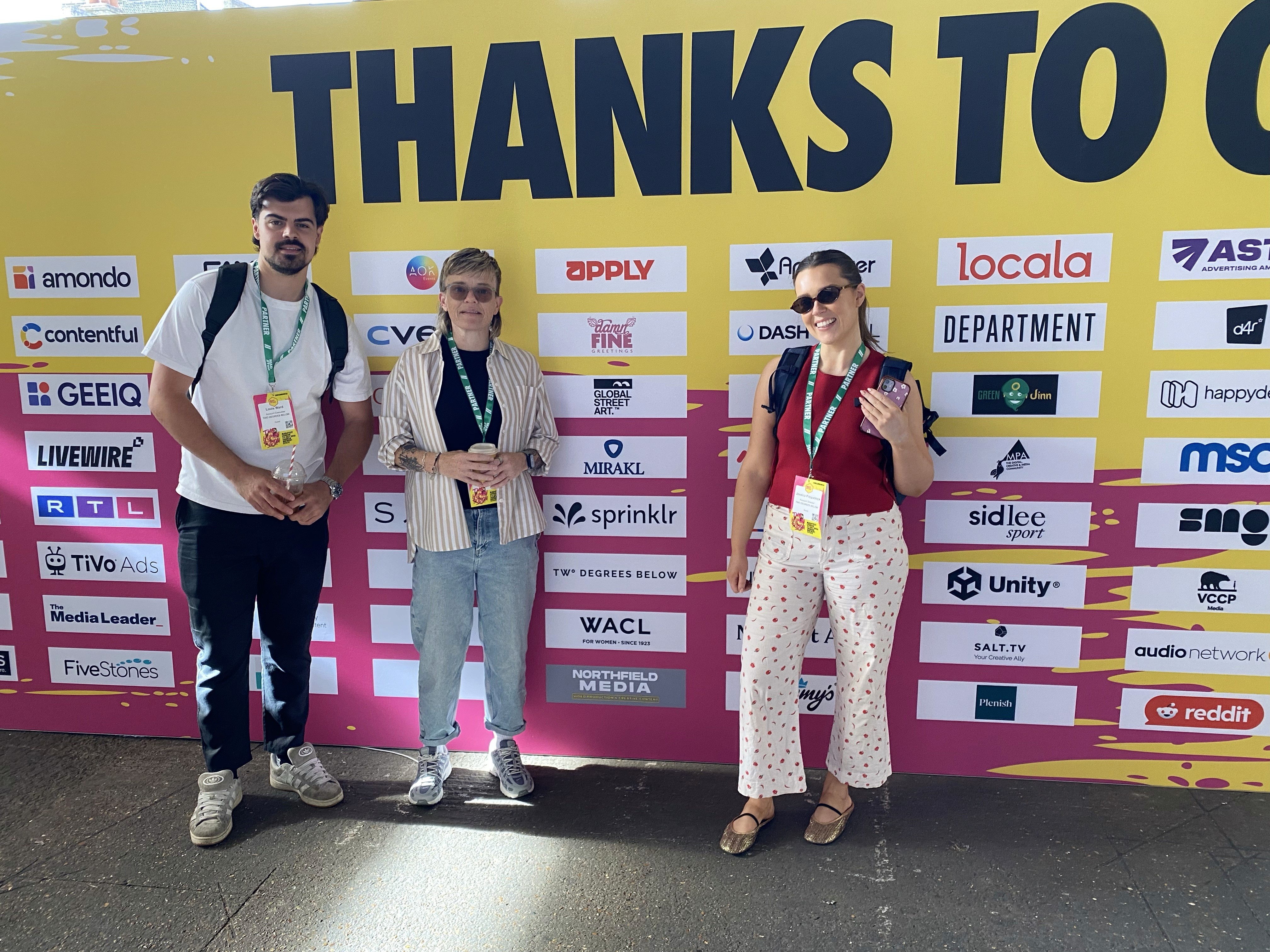
MAD//Fest 2026 pulled thousands of marketers and business leaders into Shoreditch under the theme "The Human Touch." We went, we listened and these are the four signals we think should shape how you approach change within your business.
Signal 1: Experimenting beats planning
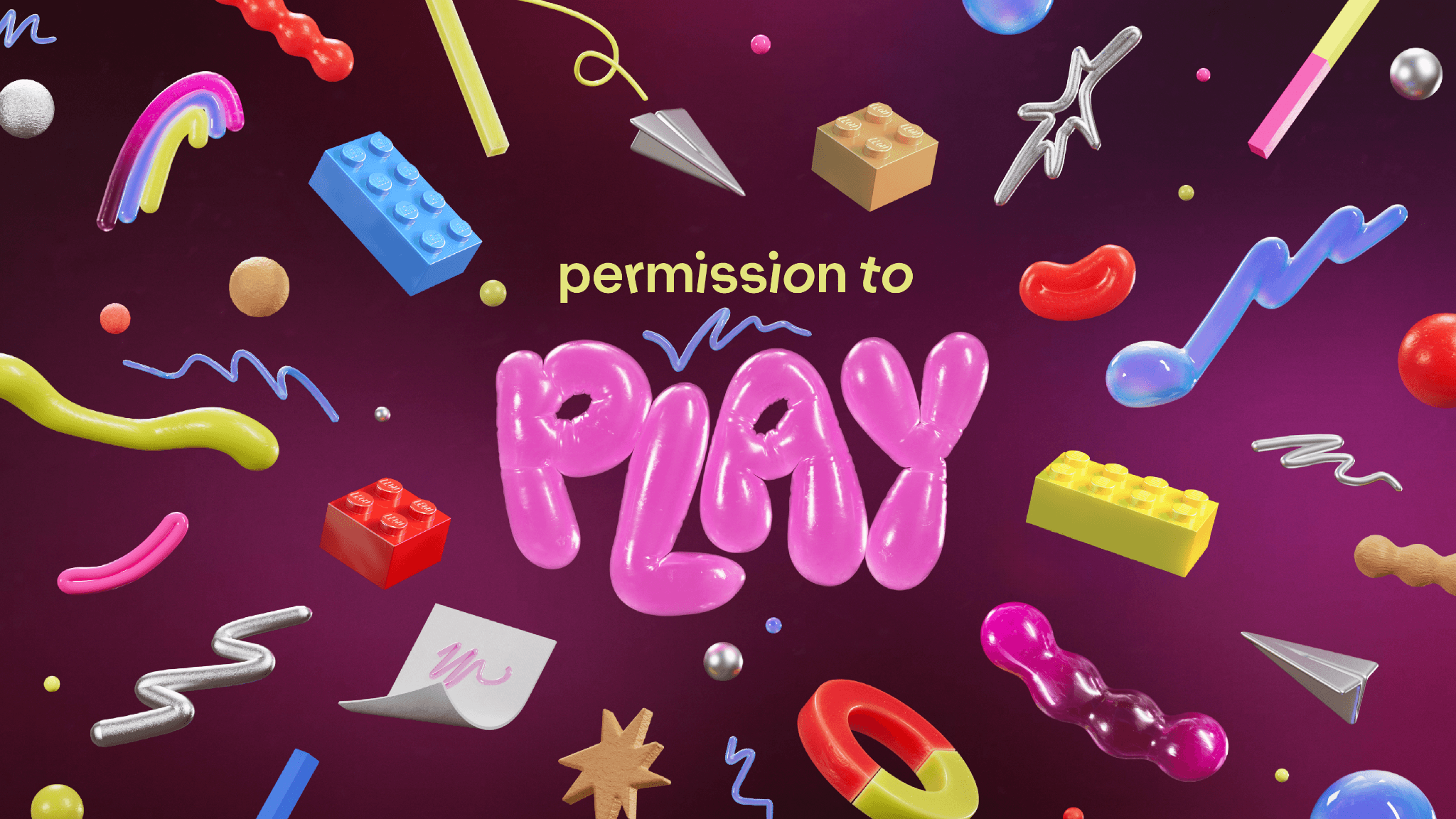
LEGO's Jonathan Wicks, with Artist Eva Cremers, picked a fight with a comfortable idea: that good work starts with the right answer. Most of us are so fixed on being correct, we've stopped experimenting at all.
Their solutions were:
Wrong answers only
Ask "why?" five times to get past the obvious
Swap "yes, but" for "yes, and"
Play, as they put it, isn't the opposite of productive work. It's often where the most meaningful change begins.
Lloyds shared their version of this, with its "1% Club," borrowed from British Cycling's marginal gains. Small, deliberate experiments run constantly. They toast the failures too, because around 90% of AI pilots won't work the first time. The payoff is real, though: one factsheet task that took 20 days now takes 30 minutes.
As AI speeds up, experimenting beats planning perfectly. The winners will have the most ideas and they'll be brave enough to test them.
The question to ask
What's our team not trying for fear of getting it wrong?
The next step to take
Pick one low-risk experiment to run in the next 30 days.
Signal 2: Emotion changes behaviour, information doesn't
A neuroscience session opened with a line built to sting: "Most of you will leave this room and do absolutely nothing different." Not cynicism, just how brains work. Information rarely changes behaviour — emotion does. Lead with feeling, because story beats data every time.
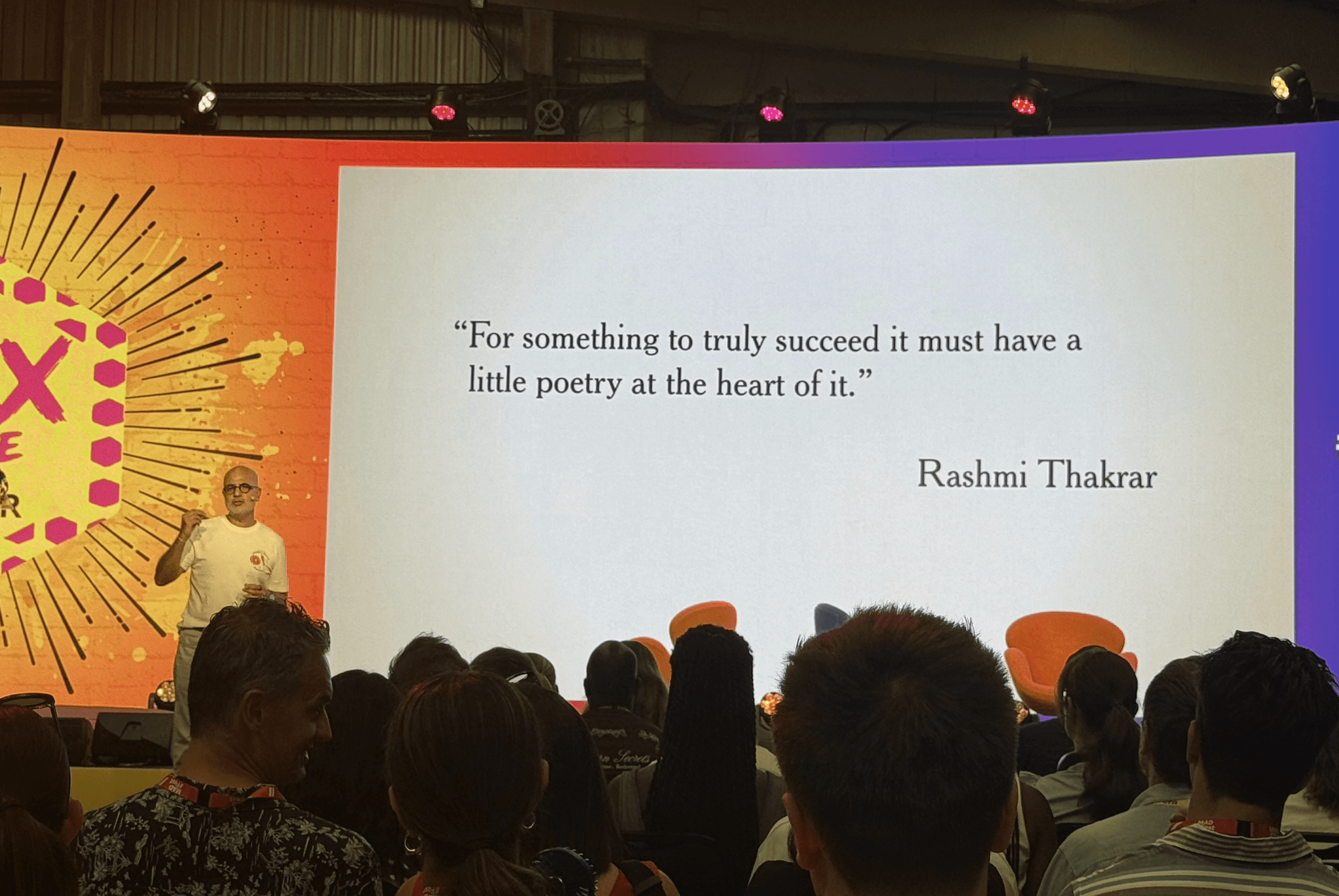
That same idea kept surfacing all week, just wearing different clothes. In a session on fundraising, it became the case for hope over fear, and for plain, human language over anything too polished — the kind of words that sound like a person rather than a press release. Give people their flowers, as the speaker put it, while they can still smell them.
By the time Louis Theroux took the stage, it had become a career philosophy, a reminder that we are always drawn to whatever feels genuinely human.
Which is where AI comes in. It can scale content endlessly, but it cannot manufacture connection, and endless content only breeds fatigue. The more the world fills up with the stuff, the rarer and more valuable a real human moment becomes.
The question to ask
What's our most important piece of comms right now?
The next step to take
Re-evaluate it. Does it make someone feel something or is it just telling them something?
Signal 3: AI transformation is a people challenge, not a tech one
Reckitt gave the least glamorous and most useful take on AI all week. Their framework runs on three Es: efficiency, effectiveness and (the one nearly everyone forgets) engagement, which asks whether your people are making the leap from what they did yesterday to what you want tomorrow.
The rules that followed were simple:
Trust your data before you trust a tool
Start with the workflow rather than the technology
Treat the whole thing as a shift in how people work rather than a piece of software to install
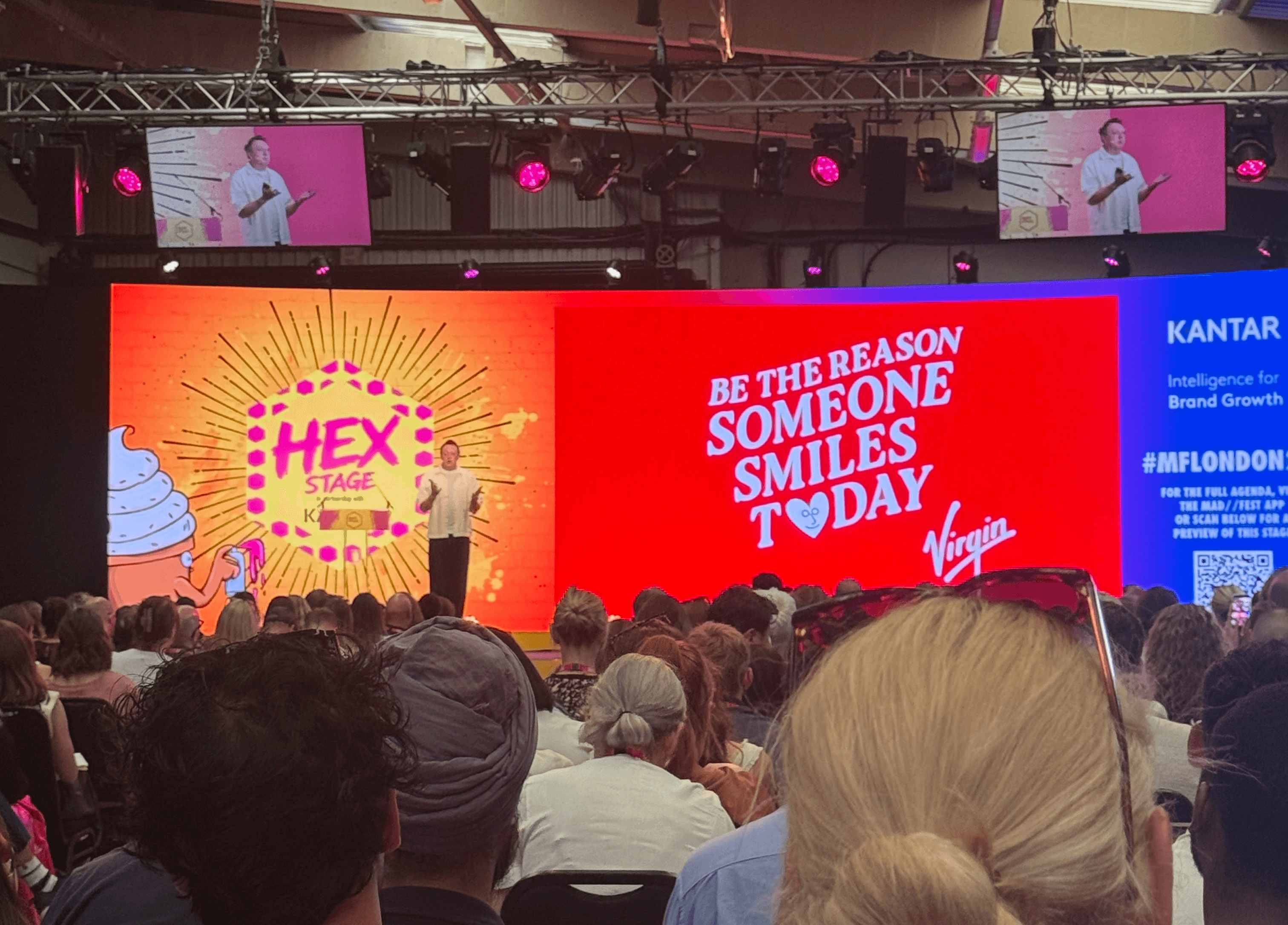
Virgin's Sam Kelly came at it from the other side and summed the whole risk up in four words: "operationally perfect, emotionally dead." Automate everything, he warned, and you can end up running flawlessly while moving nobody. The time AI frees up is meant to buy people room to think and feel, not simply to do more, faster.
Put the three together and the conclusion is hard to dodge. The tools are rarely where transformation goes wrong. Redesigning how people work and bringing them with you is the whole game.
The question to ask
Do our AI plans start with the workflow and the people running it, or with the software?
The next step to take
Before you roll out the next tool, sit down with the team and think about who will use it, why they would and how they would feel about it.
Signal 4: People commit to what they help build
One of the best behavioural science sessions pulled apart the Guinness pour. It started as pure function, a way to let the nitrogen settle, and grew into something far more powerful. Once you tell people there's a ritual, they enjoy the drink more, and a private act becomes a visible one that others notice and copy. The behaviour spreads precisely because people can see it and take part in it. Participation, in other words, is what gave the ritual its power.
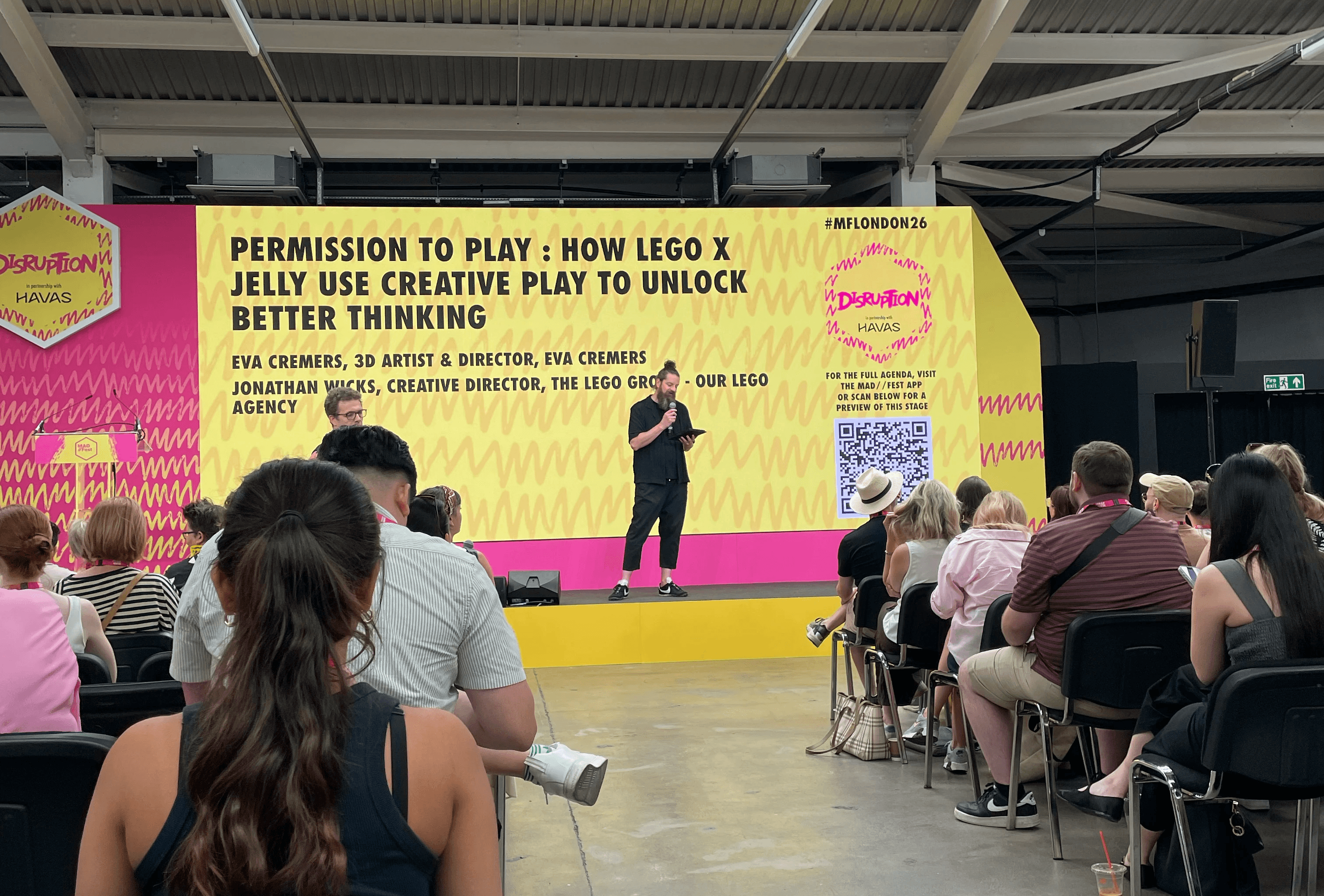
The same truth ran through how change really sticks. Reckitt's transformation worked because people made the journey themselves rather than having it announced to them, and LEGO's work on play landed on the same point: that the strongest ideas turned up when people were in the room shaping them rather than sitting still and listening. Involvement is what turns a good idea into one people will carry.
Which is the lesson under the whole event. Awareness gets you understanding, but participation gets you ownership. If you want a change to hold, the trick is to hand people a part in building it.
The question to ask
Are our people simply receiving information about a change or are they helping to shape what happens next?
The next step to take
Look at a change you're leading now (or about to lead) and build in a moment for people to steer its direction together.
The thread through all of it
Four signals and one idea underneath all of them. For all the noise about AI, everything we heard came back to something very human. The nerve to experiment. The pull of emotion. The people behind the technology. The difference between telling someone about a change and inviting them into it.
None of that is a coincidence. As more of the work gets automated, the parts that can't be are becoming the most valuable thing an organisation has.
If any of these signals speak to something you're working through, we'd love to talk.
MAD//Fest 2026 pulled thousands of marketers and business leaders into Shoreditch under the theme "The Human Touch." We went, we listened and these are the four signals we think should shape how you approach change within your business.
Signal 1: Experimenting beats planning
LEGO's Jonathan Wicks, with Artist Eva Cremers, picked a fight with a comfortable idea: that good work starts with the right answer. Most of us are so fixed on being correct, we've stopped experimenting at all.
Their solutions were:
Wrong answers only
Ask "why?" five times to get past the obvious
Swap "yes, but" for "yes, and"
Play, as they put it, isn't the opposite of productive work. It's often where the most meaningful change begins.
Lloyds shared their version of this, with its "1% Club," borrowed from British Cycling's marginal gains. Small, deliberate experiments run constantly. They toast the failures too, because around 90% of AI pilots won't work the first time. The payoff is real, though: one factsheet task that took 20 days now takes 30 minutes.
As AI speeds up, experimenting beats planning perfectly. The winners will have the most ideas and they'll be brave enough to test them.
The question to ask
What's our team not trying for fear of getting it wrong?
The next step to take
Pick one low-risk experiment to run in the next 30 days.
Signal 2: Emotion changes behaviour, information doesn't
A neuroscience session opened with a line built to sting: "Most of you will leave this room and do absolutely nothing different." Not cynicism, just how brains work. Information rarely changes behaviour — emotion does. Lead with feeling, because story beats data every time.
That same idea kept surfacing all week, just wearing different clothes. In a session on fundraising, it became the case for hope over fear, and for plain, human language over anything too polished — the kind of words that sound like a person rather than a press release. Give people their flowers, as the speaker put it, while they can still smell them.
By the time Louis Theroux took the stage, it had become a career philosophy, a reminder that we are always drawn to whatever feels genuinely human.
Which is where AI comes in. It can scale content endlessly, but it cannot manufacture connection, and endless content only breeds fatigue. The more the world fills up with the stuff, the rarer and more valuable a real human moment becomes.
The question to ask
What's our most important piece of comms right now?
The next step to take
Re-evaluate it. Does it make someone feel something or is it just telling them something?
Signal 3: AI transformation is a people challenge, not a tech one
Reckitt gave the least glamorous and most useful take on AI all week. Their framework runs on three Es: efficiency, effectiveness and (the one nearly everyone forgets) engagement, which asks whether your people are making the leap from what they did yesterday to what you want tomorrow.
The rules that followed were simple:
Trust your data before you trust a tool
Start with the workflow rather than the technology
Treat the whole thing as a shift in how people work rather than a piece of software to install
Virgin's Sam Kelly came at it from the other side and summed the whole risk up in four words: "operationally perfect, emotionally dead." Automate everything, he warned, and you can end up running flawlessly while moving nobody. The time AI frees up is meant to buy people room to think and feel, not simply to do more, faster.
Put the three together and the conclusion is hard to dodge. The tools are rarely where transformation goes wrong. Redesigning how people work and bringing them with you is the whole game.
The question to ask
Do our AI plans start with the workflow and the people running it, or with the software?
The next step to take
Before you roll out the next tool, sit down with the team and think about who will use it, why they would and how they would feel about it.
Signal 4: People commit to what they help build
One of the best behavioural science sessions pulled apart the Guinness pour. It started as pure function, a way to let the nitrogen settle, and grew into something far more powerful. Once you tell people there's a ritual, they enjoy the drink more, and a private act becomes a visible one that others notice and copy. The behaviour spreads precisely because people can see it and take part in it. Participation, in other words, is what gave the ritual its power.
The same truth ran through how change really sticks. Reckitt's transformation worked because people made the journey themselves rather than having it announced to them, and LEGO's work on play landed on the same point: that the strongest ideas turned up when people were in the room shaping them rather than sitting still and listening. Involvement is what turns a good idea into one people will carry.
Which is the lesson under the whole event. Awareness gets you understanding, but participation gets you ownership. If you want a change to hold, the trick is to hand people a part in building it.
The question to ask
Are our people simply receiving information about a change or are they helping to shape what happens next?
The next step to take
Look at a change you're leading now (or about to lead) and build in a moment for people to steer its direction together.
The thread through all of it
Four signals and one idea underneath all of them. For all the noise about AI, everything we heard came back to something very human. The nerve to experiment. The pull of emotion. The people behind the technology. The difference between telling someone about a change and inviting them into it.
None of that is a coincidence. As more of the work gets automated, the parts that can't be are becoming the most valuable thing an organisation has.
If any of these signals speak to something you're working through, we'd love to talk.
Ready to dive deeper?
Ready to
dive deeper?

What your AI gender adoption gap is telling you about leadership
What your AI gender adoption gap is telling you about leadership
Two Degrees Below
Two Degrees Below
Your AI adoption data is showing you something more useful than usage rates. It's showing you who feels safe enough to experiment, and who doesn't. Here's why the gap is a leadership problem, not a skills one.
Your AI adoption data is showing you something more useful than usage rates. It's showing you who feels safe enough to experiment, and who doesn't. Here's why the gap is a leadership problem, not a skills one.
Read more

Taste, experience, creativity: today's real competitive advantage
Taste, experience, creativity: today's real competitive advantage
Two Degrees Below
Two Degrees Below
AI has handed everyone the same capabilities and tech competency isn't the competitive edge it once was. Three of our own go deep on the ideas that are, and what they really mean for the brands we work with.
AI has handed everyone the same capabilities and tech competency isn't the competitive edge it once was. Three of our own go deep on the ideas that are, and what they really mean for the brands we work with.
Read more