
>
>
>
>
What your AI gender adoption gap is telling you about leadership
...
...
What your AI gender adoption gap is telling you about leadership
What your AI gender adoption gap is telling you about leadership

Somewhere in your organisation, there's a dashboard showing who's using AI and who isn't. Look at it the way most teams do, and you'll probably reach the obvious conclusion: some people, often women, are using AI less than their male colleagues, and the data backs that up. They need more training, more encouragement and a nudge in the right direction.
That read is wrong. And that mistake is hiding one of the most useful data points your organisation has.
The gap in AI adoption isn't about who has the tool proficiency or prompt skills and who doesn't. It's about who feels safe enough to experiment in front of their colleagues, and who doesn't. Read properly, that dashboard isn't a technology metric. It's a psychological safety audit your organisation ran on itself, by accident.
The data you didn't mean to collect
The headline numbers look like a familiar story: women adopting AI more cautiously than men. US research from Lean In puts real numbers behind it. Only 30% of women say their managers encouraged them to use AI, against 37% of men. Among people who do use AI at work, men are 27% more likely than women to be praised for it. And women are 32% more likely to worry that using AI looks like cheating, a fear that says something on its own about how visible and judged this behaviour feels.
None of that is a skills problem. It's an encouragement problem, a recognition problem and a judgement problem. All three start with leadership and culture, and shape how the technology gets used.
Nicole Faubel, Head of Strategy, said:
“It's easy to look at adoption data and reach for a technical fix: better onboarding, a mandatory course, a champions programme. It's harder to ask what the data is truly posing: do we have the conditions and the leadership in place to act on what this is telling us? If the barrier isn't access or ability, no amount of training closes the gap. You'll just end up with better-trained people still choosing not to go first.”
Why this is adaptive, not technical
There's a useful distinction in change work between technical problems and adaptive ones. Technical problems have a known fix. Adaptive problems need the people inside the system to change how they think, behave and relate to each other.
AI adoption gets treated as a technical challenge by default, because it arrives dressed as technology. But for many organisations, the bigger challenge is creating the conditions for people to use AI tools confidently, consistently and at scale.
Research commissioned by Infosys found that psychological barriers are proving a bigger obstacle to enterprise AI adoption than technological ones. It also found that 83% of executives believe a culture that prioritises psychological safety improves the success of AI initiatives. The message is clear: achieving value from AI depends as much on how people learn, experiment and adapt as it does on the technology itself.
In practice, that makes AI adoption an adaptive challenge.
Nicole added:
“As AI continues to evolve, organisations must prioritise learning alongside it, and adapting behaviours and ways of working as fast as the technology changes if they’re to gain the most value.”
The risk managers you're optimising out
But what if some of the people moving slowly on AI adoption aren't lagging? What if they're exercising judgement? They could be the ones asking what happens to accuracy, to accountability, to the people whose jobs sit closest to automation, before they adopt a tool wholesale. That instinct isn't a deficit. In a business, it's risk management, and it's exactly the perspective you stand to lose if your culture only rewards whoever moves fastest.
Nicole said:
“Women's hesitancy may be less of an anomaly and more of an early signal. The question for leaders isn't why some people are moving more cautiously, but what their caution reveals about the conditions for learning and experimentation across the organisation. Treat that signal as noise, and you'll keep funding training programmes that don't move the number. Pay more curious attention to it, and you gain an honest, low-cost insight into whether your culture truly supports experimentation and learning.”
Leadership as experimentation, not authority
If the adoption gap is really a reflection of how people experience uncertainty, the fix isn't a comms campaign telling people AI is safe to use. Leaders need to demonstrate that they don't have all the answers either.
Culture is shaped by what leaders model, not what they announce. If senior leaders present AI adoption as something they've already mastered, they can unintentionally create a standard others feel they're failing to meet. A more useful posture is to treat AI as an ongoing experiment: sharing what you've tried, what surprised you and where you've got it wrong. That gives others permission to learn, adapt and do the same.
The takeaway
The AI adoption gap was never really about AI. It's a mirror your organisation happened to hold up to itself, and what it shows is who feels safe enough to try, fail and try again in view of their colleagues.
You can spend the next year buying more tools and running more training. Or you can ask the harder, cheaper question: if this is what our culture looks like under one technology transition, what does that tell us about how we lead through everything else?
Make a change this week with these questions
When did someone on your team last say “I don’t know”, out loud in front of you?
Whose caution have you secretly been reading as reluctance, or friction?
What would change if you named what you’re still getting wrong about using AI at work, this week?
These aren’t rhetorical questions. Pick one, ask it in your next leadership meeting and see what happens in the room.
Somewhere in your organisation, there's a dashboard showing who's using AI and who isn't. Look at it the way most teams do, and you'll probably reach the obvious conclusion: some people, often women, are using AI less than their male colleagues, and the data backs that up. They need more training, more encouragement and a nudge in the right direction.
That read is wrong. And that mistake is hiding one of the most useful data points your organisation has.
The gap in AI adoption isn't about who has the tool proficiency or prompt skills and who doesn't. It's about who feels safe enough to experiment in front of their colleagues, and who doesn't. Read properly, that dashboard isn't a technology metric. It's a psychological safety audit your organisation ran on itself, by accident.
The data you didn't mean to collect
The headline numbers look like a familiar story: women adopting AI more cautiously than men. US research from Lean In puts real numbers behind it. Only 30% of women say their managers encouraged them to use AI, against 37% of men. Among people who do use AI at work, men are 27% more likely than women to be praised for it. And women are 32% more likely to worry that using AI looks like cheating, a fear that says something on its own about how visible and judged this behaviour feels.
None of that is a skills problem. It's an encouragement problem, a recognition problem and a judgement problem. All three start with leadership and culture, and shape how the technology gets used.
Nicole Faubel, Head of Strategy, said:
“It's easy to look at adoption data and reach for a technical fix: better onboarding, a mandatory course, a champions programme. It's harder to ask what the data is truly posing: do we have the conditions and the leadership in place to act on what this is telling us? If the barrier isn't access or ability, no amount of training closes the gap. You'll just end up with better-trained people still choosing not to go first.”
Why this is adaptive, not technical
There's a useful distinction in change work between technical problems and adaptive ones. Technical problems have a known fix. Adaptive problems need the people inside the system to change how they think, behave and relate to each other.
AI adoption gets treated as a technical challenge by default, because it arrives dressed as technology. But for many organisations, the bigger challenge is creating the conditions for people to use AI tools confidently, consistently and at scale.
Research commissioned by Infosys found that psychological barriers are proving a bigger obstacle to enterprise AI adoption than technological ones. It also found that 83% of executives believe a culture that prioritises psychological safety improves the success of AI initiatives. The message is clear: achieving value from AI depends as much on how people learn, experiment and adapt as it does on the technology itself.
In practice, that makes AI adoption an adaptive challenge.
Nicole added:
“As AI continues to evolve, organisations must prioritise learning alongside it, and adapting behaviours and ways of working as fast as the technology changes if they’re to gain the most value.”
The risk managers you're optimising out
But what if some of the people moving slowly on AI adoption aren't lagging? What if they're exercising judgement? They could be the ones asking what happens to accuracy, to accountability, to the people whose jobs sit closest to automation, before they adopt a tool wholesale. That instinct isn't a deficit. In a business, it's risk management, and it's exactly the perspective you stand to lose if your culture only rewards whoever moves fastest.
Nicole said:
“Women's hesitancy may be less of an anomaly and more of an early signal. The question for leaders isn't why some people are moving more cautiously, but what their caution reveals about the conditions for learning and experimentation across the organisation. Treat that signal as noise, and you'll keep funding training programmes that don't move the number. Pay more curious attention to it, and you gain an honest, low-cost insight into whether your culture truly supports experimentation and learning.”
Leadership as experimentation, not authority
If the adoption gap is really a reflection of how people experience uncertainty, the fix isn't a comms campaign telling people AI is safe to use. Leaders need to demonstrate that they don't have all the answers either.
Culture is shaped by what leaders model, not what they announce. If senior leaders present AI adoption as something they've already mastered, they can unintentionally create a standard others feel they're failing to meet. A more useful posture is to treat AI as an ongoing experiment: sharing what you've tried, what surprised you and where you've got it wrong. That gives others permission to learn, adapt and do the same.
The takeaway
The AI adoption gap was never really about AI. It's a mirror your organisation happened to hold up to itself, and what it shows is who feels safe enough to try, fail and try again in view of their colleagues.
You can spend the next year buying more tools and running more training. Or you can ask the harder, cheaper question: if this is what our culture looks like under one technology transition, what does that tell us about how we lead through everything else?
Make a change this week with these questions
When did someone on your team last say “I don’t know”, out loud in front of you?
Whose caution have you secretly been reading as reluctance, or friction?
What would change if you named what you’re still getting wrong about using AI at work, this week?
These aren’t rhetorical questions. Pick one, ask it in your next leadership meeting and see what happens in the room.
Ready to dive deeper?
Ready to
dive deeper?

Taste, experience, creativity: today's real competitive advantage
Taste, experience, creativity: today's real competitive advantage
Two Degrees Below
Two Degrees Below
AI has handed everyone the same capabilities and tech competency isn't the competitive edge it once was. Three of our own go deep on the ideas that are, and what they really mean for the brands we work with.
AI has handed everyone the same capabilities and tech competency isn't the competitive edge it once was. Three of our own go deep on the ideas that are, and what they really mean for the brands we work with.
Read more
The four signals every change plan needs right now
The four signals every change plan needs right now
Two Degrees Below
Two Degrees Below
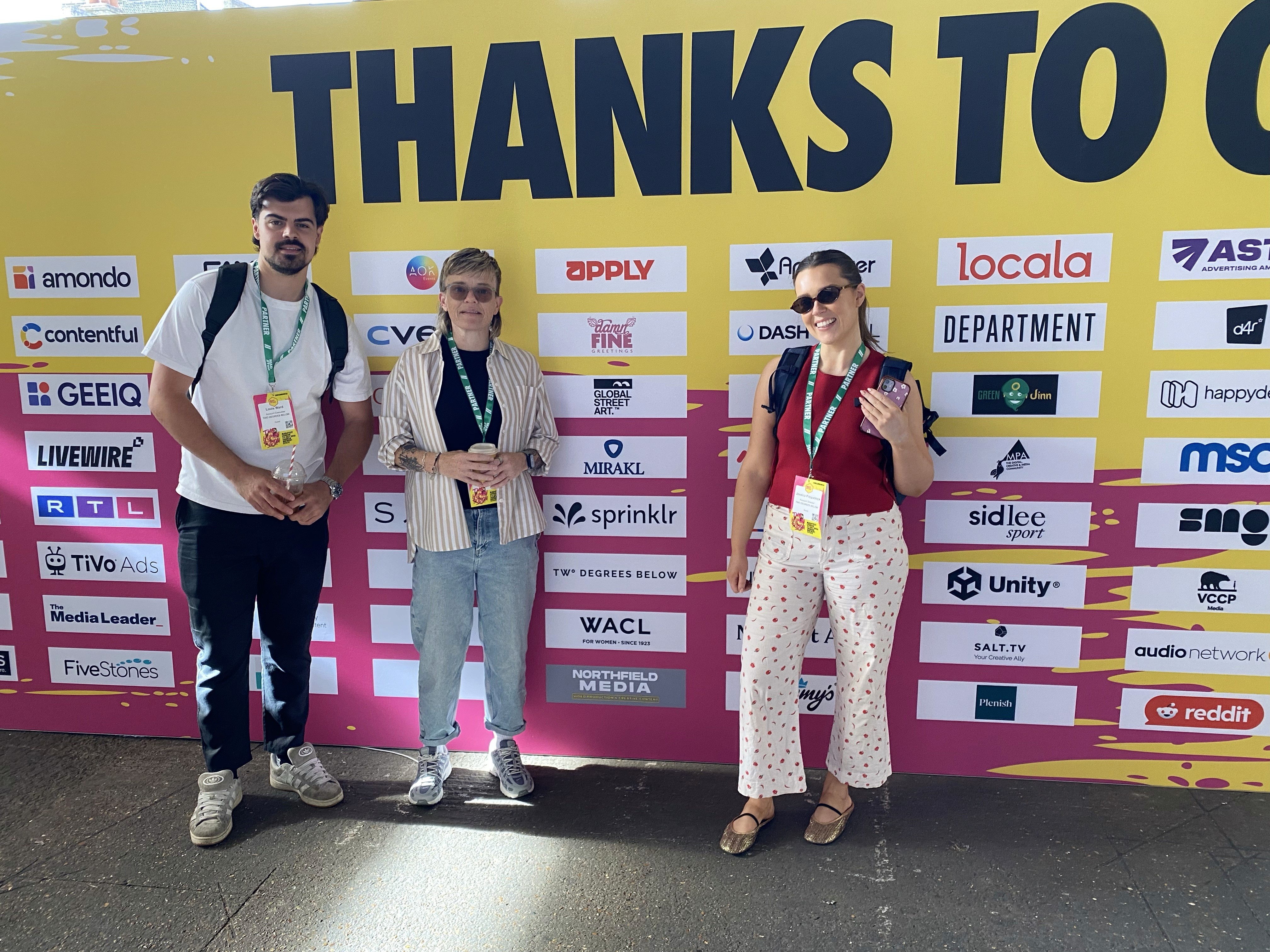
Four signals from MAD//Fest 2026 on experimenting, emotion and ownership — and what they mean for the change plan you're building right now.
Four signals from MAD//Fest 2026 on experimenting, emotion and ownership — and what they mean for the change plan you're building right now.
Read more