
The cost of missing the shift
The cost of missing the shift

Why change stalls when belief doesn’t turn into behaviour.
Most organisations don’t fail to change because their strategy is wrong. They fail because the strategy never becomes shared belief or hardwired into the daily reality of the business. Change programmes focus on what needs to happen. New priorities, new structures and new capabilities to be created. But none of it lands until people move.
The moment people stop observing change and start acting on it? That’s the shift. It’s when someone understands their role and participates. Explains it to a colleague. Backs a decision. And momentum starts to build.
When a shift doesn’t happen, the consequences are predictable. And expensive.
Change doesn’t fail in boardrooms, it fades in everyday moments
Change rarely collapses overnight. It erodes quietly, in a thousand small hesitations.
As our Consulting Director, Matt Ede, puts it:
“We see when change has failed most clearly in the 'after' moments. For example, while a simplification initiative might have initial success, complexity can still creep back in. Decisions get reopened, managers escalate problems instead of owning solutions and teams wait for more detail because they don’t feel safe to act. That’s not resistance, it’s hesitation. And hesitation spreads.”
As leadership, you rarely get open rebellion. Instead, you get polite agreement. Nods in workshops and the right language repeated back to you. But the same behaviours as before.
We see this across culture programmes, performance frameworks, leadership transitions and digital transformations. Until people understand what the change means for them – and feel confident acting on it – adoption stays surface-level.
At NatWest, for example, shifting culture meant more than introducing a new performance framework. The real breakthrough came when the change was broken into practical steps managers could carry into everyday conversations and decisions. By giving people the language, confidence and permission to 'Go Beyond’ (at the point they needed to apply it) they were able to lead performance differently. Belief turned into behaviour.
Without translation, leaders can masquerade as alignment. On the surface, everything looks great while underneath, nothing has moved.
The middle is where we win or lose momentum
The pivotal moment in any change programme sits with managers. Caught between leadership intent and day-to-day reality, if they don't feel equipped to carry change, they default to self-protection.
Leaders often respond with more communication in this situation. But managers rarely need more slides. They need permission, and reassurance that imperfect decisions will be backed.
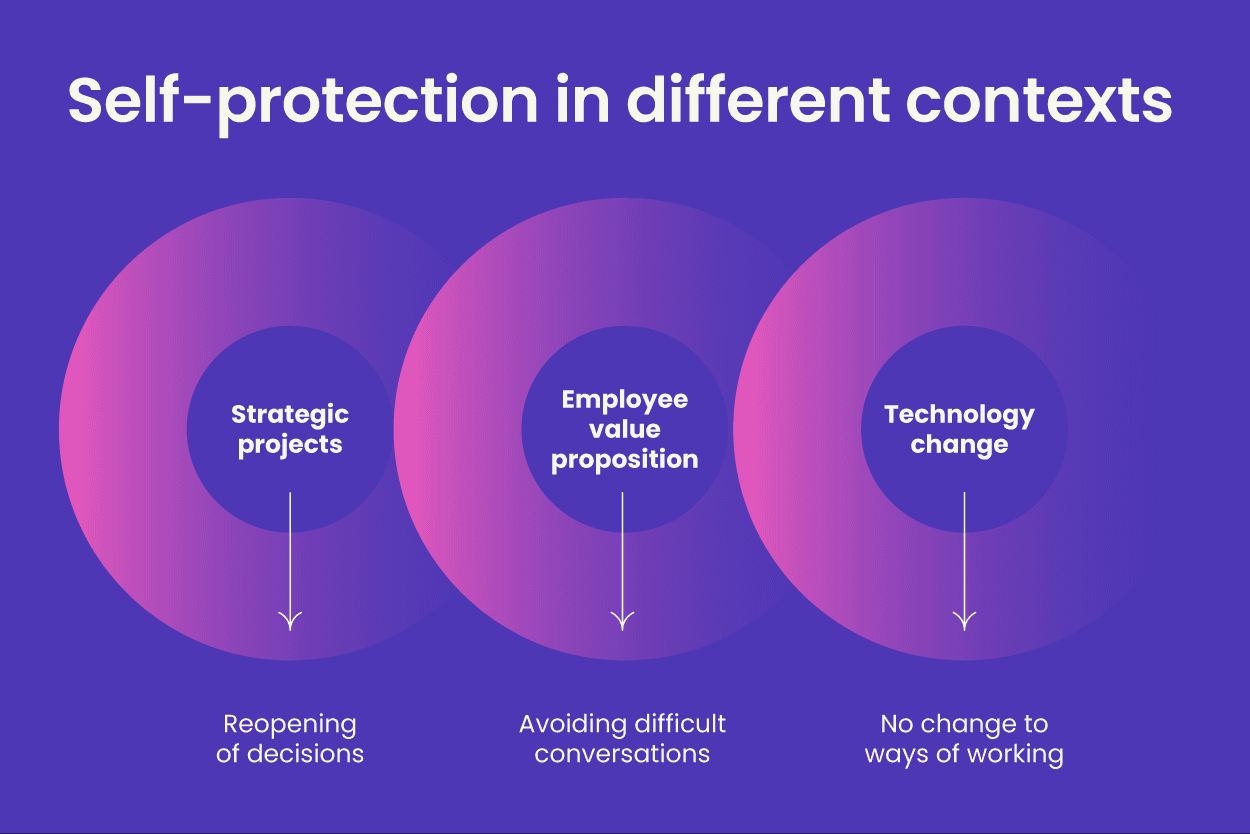
Self-protection shows up differently depending on the context:
For strategic projects, it can manifest in the constant reopening of decisions.
With Employee Value Proposition (EVP) or other culture initiatives, managers repeat the messaging but avoid difficult conversations
In technology change, people might adopt tools without changing how they work
When managers feel safe to move, others follow.
When scepticism becomes the culture
Repeated change that doesn’t land teaches people something: wait it out. Not consciously, but behaviourally. And if scepticism hardens in influential groups – senior specialists, partners or high performers – then you’re in trouble. Scepticism becomes the organisation’s immune system, and anything new is rejected on contact.
“We’ve seen leadership teams have to actively rebuild confidence after intense periods of change,” says Matt. “Restoring belief requires more than polished messaging. It demands visible shifts in how leaders show up.”
Why the shift is the real work
Change doesn’t happen because you announce it. It happens when people feel it and choose to move with you. That moment, when belief becomes behaviour, is what we call the Two Degrees Shift.
It's rarely dramatic. It's the day a leader backs a call publicly. The moment a manager chooses to own a decision. The instant a team stops asking what something means and starts acting on what they know.
Two degrees doesn’t sound like much. But small shifts compound fast.
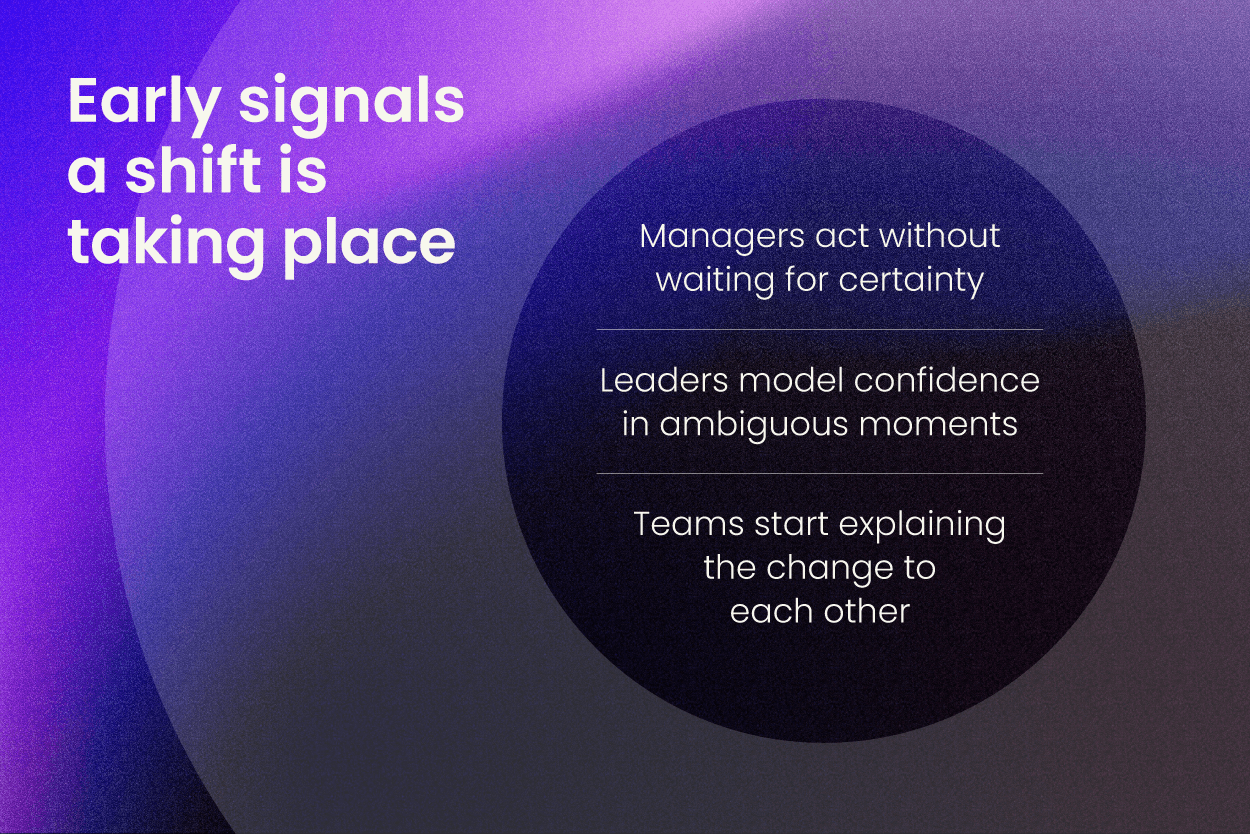
We look for early signals:
Managers act without waiting for certainty
Leaders model confidence in ambiguous moments
Teams start explaining the change to each other
These moments won't show up on a dashboard. But they’re where change is decided.
The commercial cost of staying stuck
The damage of a missing shift isn’t immediate. It’s slower. Cumulative.
Decisions stretch, talent disengages and performance slows. But competitors don’t.
At Virgin Atlantic, brand strength alone wasn’t enough to secure profitability. The turning point came when belief aligned internally and behaviours followed. Leadership alignment and a sustained focus on how people showed up each day helped restore momentum and contributed to a return to profitability.
The point isn’t that belief alone creates results. It’s that without belief, the behaviours required for results never compound.
The shift is the strategy
If you’re leading change right now, the better question isn't "Is the strategy right?” It’s "Are our people ready to move?”
In our experience, organisations navigating change well don’t just communicate intent. They create the conditions for movement. That’s where we focus our work. That’s the Two Degree Shift.
Not a model on a slide but a movement you can feel. And in a world where change is constant, the ability to spark a shift may be the most commercial capability of all.
Will you make the first move?
So here’s the real test. Tomorrow morning:
What decision will you back publicly?
What hesitation will you remove?
What permission will you give?
Because a shift doesn’t start with a programme plan. It starts with a person choosing to move. And that person might be you.
Why change stalls when belief doesn’t turn into behaviour.
Most organisations don’t fail to change because their strategy is wrong. They fail because the strategy never becomes shared belief or hardwired into the daily reality of the business. Change programmes focus on what needs to happen. New priorities, new structures and new capabilities to be created. But none of it lands until people move.
The moment people stop observing change and start acting on it? That’s the shift. It’s when someone understands their role and participates. Explains it to a colleague. Backs a decision. And momentum starts to build.
When a shift doesn’t happen, the consequences are predictable. And expensive.
Change doesn’t fail in boardrooms, it fades in everyday moments
Change rarely collapses overnight. It erodes quietly, in a thousand small hesitations.
As our Consulting Director, Matt Ede, puts it:
“We see when change has failed most clearly in the 'after' moments. For example, while a simplification initiative might have initial success, complexity can still creep back in. Decisions get reopened, managers escalate problems instead of owning solutions and teams wait for more detail because they don’t feel safe to act. That’s not resistance, it’s hesitation. And hesitation spreads.”
As leadership, you rarely get open rebellion. Instead, you get polite agreement. Nods in workshops and the right language repeated back to you. But the same behaviours as before.
We see this across culture programmes, performance frameworks, leadership transitions and digital transformations. Until people understand what the change means for them – and feel confident acting on it – adoption stays surface-level.
At NatWest, for example, shifting culture meant more than introducing a new performance framework. The real breakthrough came when the change was broken into practical steps managers could carry into everyday conversations and decisions. By giving people the language, confidence and permission to 'Go Beyond’ (at the point they needed to apply it) they were able to lead performance differently. Belief turned into behaviour.
Without translation, leaders can masquerade as alignment. On the surface, everything looks great while underneath, nothing has moved.
The middle is where we win or lose momentum
The pivotal moment in any change programme sits with managers. Caught between leadership intent and day-to-day reality, if they don't feel equipped to carry change, they default to self-protection.
Leaders often respond with more communication in this situation. But managers rarely need more slides. They need permission, and reassurance that imperfect decisions will be backed.
Self-protection shows up differently depending on the context:
For strategic projects, it can manifest in the constant reopening of decisions.
With Employee Value Proposition (EVP) or other culture initiatives, managers repeat the messaging but avoid difficult conversations
In technology change, people might adopt tools without changing how they work
When managers feel safe to move, others follow.
When scepticism becomes the culture
Repeated change that doesn’t land teaches people something: wait it out. Not consciously, but behaviourally. And if scepticism hardens in influential groups – senior specialists, partners or high performers – then you’re in trouble. Scepticism becomes the organisation’s immune system, and anything new is rejected on contact.
“We’ve seen leadership teams have to actively rebuild confidence after intense periods of change,” says Matt. “Restoring belief requires more than polished messaging. It demands visible shifts in how leaders show up.”
Why the shift is the real work
Change doesn’t happen because you announce it. It happens when people feel it and choose to move with you. That moment, when belief becomes behaviour, is what we call the Two Degrees Shift.
It's rarely dramatic. It's the day a leader backs a call publicly. The moment a manager chooses to own a decision. The instant a team stops asking what something means and starts acting on what they know.
Two degrees doesn’t sound like much. But small shifts compound fast.
We look for early signals:
Managers act without waiting for certainty
Leaders model confidence in ambiguous moments
Teams start explaining the change to each other
These moments won't show up on a dashboard. But they’re where change is decided.
The commercial cost of staying stuck
The damage of a missing shift isn’t immediate. It’s slower. Cumulative.
Decisions stretch, talent disengages and performance slows. But competitors don’t.
At Virgin Atlantic, brand strength alone wasn’t enough to secure profitability. The turning point came when belief aligned internally and behaviours followed. Leadership alignment and a sustained focus on how people showed up each day helped restore momentum and contributed to a return to profitability.
The point isn’t that belief alone creates results. It’s that without belief, the behaviours required for results never compound.
The shift is the strategy
If you’re leading change right now, the better question isn't "Is the strategy right?” It’s "Are our people ready to move?”
In our experience, organisations navigating change well don’t just communicate intent. They create the conditions for movement. That’s where we focus our work. That’s the Two Degree Shift.
Not a model on a slide but a movement you can feel. And in a world where change is constant, the ability to spark a shift may be the most commercial capability of all.
Will you make the first move?
So here’s the real test. Tomorrow morning:
What decision will you back publicly?
What hesitation will you remove?
What permission will you give?
Because a shift doesn’t start with a programme plan. It starts with a person choosing to move. And that person might be you.
Ready to dive deeper?
Ready to
dive deeper?

What your AI gender adoption gap is telling you about leadership
What your AI gender adoption gap is telling you about leadership
Two Degrees Below
Two Degrees Below
Your AI adoption data is showing you something more useful than usage rates. It's showing you who feels safe enough to experiment, and who doesn't. Here's why the gap is a leadership problem, not a skills one.
Your AI adoption data is showing you something more useful than usage rates. It's showing you who feels safe enough to experiment, and who doesn't. Here's why the gap is a leadership problem, not a skills one.
Read more

Taste, experience, creativity: today's real competitive advantage
Taste, experience, creativity: today's real competitive advantage
Two Degrees Below
Two Degrees Below
AI has handed everyone the same capabilities and tech competency isn't the competitive edge it once was. Three of our own go deep on the ideas that are, and what they really mean for the brands we work with.
AI has handed everyone the same capabilities and tech competency isn't the competitive edge it once was. Three of our own go deep on the ideas that are, and what they really mean for the brands we work with.
Read more