Five takeaways from Engage Employee Summit
Five takeaways from Engage Employee Summit
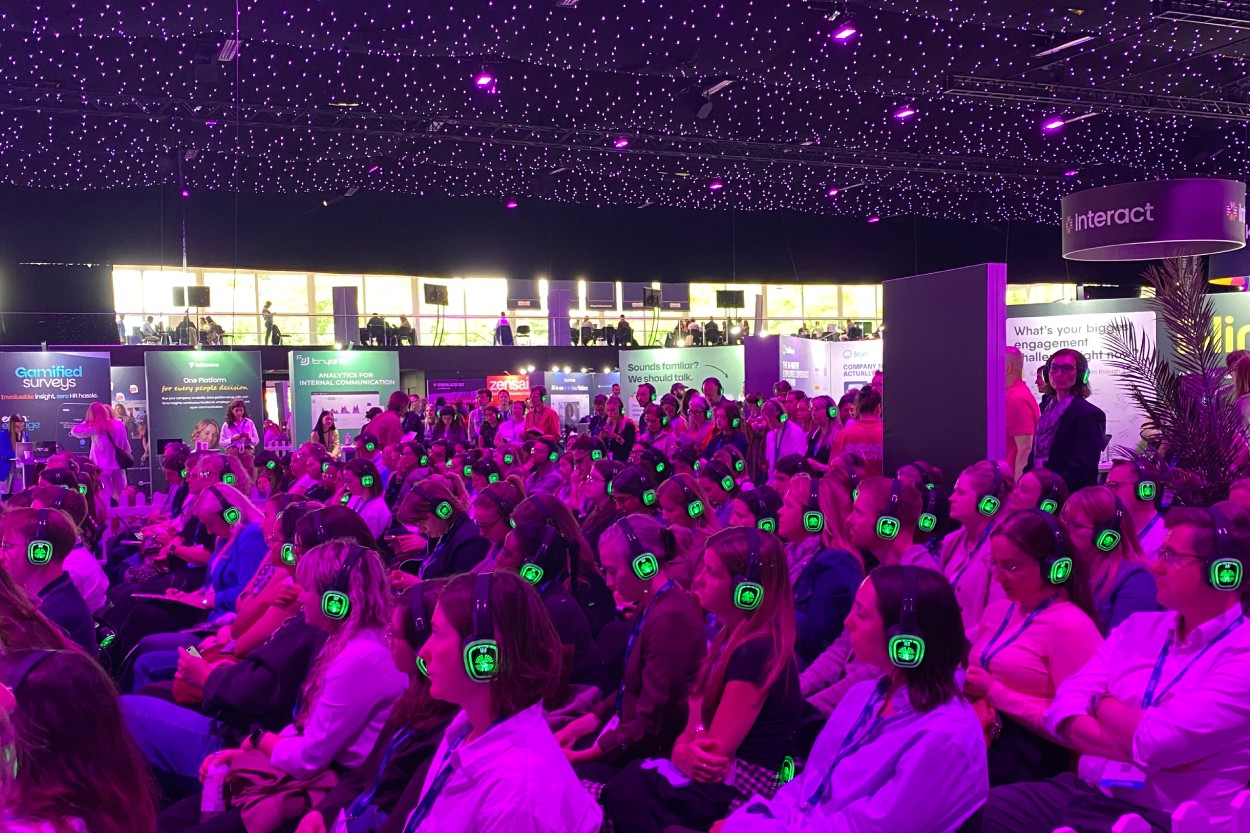
Two days. Three of our team. A lot of data about trust, AI and the slow death of the all-staff email. Here’s what actually stuck.
Trust is the real crisis, and it's getting worse
Before we talk channels, platforms or content, we need to talk about trust. Because across every session, the data told the same story: it's declining. Fast.
The IC Index, presented by Jennifer Sproul, showed that only around 50 per cent of employees currently trust their leadership team. The Edelman Trust Barometer 2026 pointed to a broader retreat: people pulling away from large institutions and leaning into the relationships closest to them.
"Trust is a commodity that takes a long time to build and is easy to lose," said Dominic Walters from Lloyds Banking Group. "And it's declining."
But employees do trust one person: their manager
Here's the flip side. While trust in senior leadership is low, the IC Index found that 73 per cent of employees trust their direct manager. Meaning the line manager is now one of the most important channels in any organisation's communications mix.
Senior Project Manager, Ryan Spence, picked up on this across multiple sessions:
"There's a very clear emerging shift in how internal comms sees itself. Less 'crafting and drafting', more helping organisations build trust, clarity and connection during periods of constant change. And the manager is central to that."
Dominic Walters was direct about it in the Future of Internal Comms session. Helping frontline managers understand that their job is to make sense of complexity for their teams – not to be a mouthpiece – requires investment in skills, not just briefing packs.
As Ryan puts it: “The future of frontline comms is manager-enabled, not manager-dependent."
You don't have a communication volume problem. You have a relevance problem.
One of the clearest provocations of the event: we're drowning in comms, not starved of them.
Joel Turner, Head of Internal Communication at Betfred, offered a simple pre-send checklist during the Cutting Through the Noise session: Who is this for? What should they do? Why should they care? If you can't answer those three questions clearly, it probably doesn't need to be sent.
The numbers make it concrete. The average employee receives around 120 emails a day. And yet, 72 per cent say they still feel out of the loop on key updates. More isn't the answer. Relevance is.
Ryan’s take? "Making communication feel more human, more useful, more localised and more emotionally credible beats polished, but emotionally shallow, comms every time.”
AI is making some teams lonelier
"You cannot prompt your way to genuine EQ."
While AI promises efficiency, we're not seeing the engagement or wellbeing gains people expected. Cited Gallup data puts global workforce disengagement at 77 per cent. One study found an 11 per cent increase in boredom linked to heavy reliance on large language model tools.
The argument in the room wasn't anti-AI. It was about what happens when people start outsourcing the things that make work meaningful – perspective-taking, active listening, adaptive communication, emotional self-regulation.
Ruth’s take: Two days of sessions, and AI and human connection kept coming up together. Not as opposites, but as partners. The organisations getting it right are using technology to remove friction and people to create meaning."
Engagement comes from feeling progress, not understanding strategy
The Rebuilding Belief session from Skyscanner, presented by Andrew Borthwick, shared how Internal Comms shifted from amplifiers to curators of culture.
Post-Covid, engagement was falling. People understood the strategy, they just didn't believe in it. The solution: They launched the strategy as a moment, not a document. They built everything around one idea: momentum. And showed progress through products and people, not just numbers.
The result: engagement hit an all-time high of 82 per cent. Belief in the vision rose by 23 points.
Ruth's takeaway spanned the whole event: "Engagement doesn't come from understanding strategy. It comes from feeling progress. Momentum is the multiplier."
Bonus takeaway: The elephant that wasn't in the room
AI, trust, clarity and connection dominated two days of conversation. But Charlie Hepburn, our Client Growth Lead, left with a nagging question.
"The one thing that felt missing was the importance of human interaction through shared experience and lived events. I only heard it mentioned once across all the talks I attended. And that feels like a misstep. Because if trust is built through action, not words, then shared experiences are where organisations make it real."
The irony isn't lost on us. A summit about connection and trust, largely silent on the power of people actually being in a room together – doing something, feeling something, remembering something. If the research says trust is declining and relevance is everything, the argument for experience-led approaches has never been stronger. It just didn't make the agenda.
Trust is declining, AI is changing the game and your frontline colleagues are still finding out last. If any of this sounds familiar, let’s talk.
Two days. Three of our team. A lot of data about trust, AI and the slow death of the all-staff email. Here’s what actually stuck.
Trust is the real crisis, and it's getting worse
Before we talk channels, platforms or content, we need to talk about trust. Because across every session, the data told the same story: it's declining. Fast.
The IC Index, presented by Jennifer Sproul, showed that only around 50 per cent of employees currently trust their leadership team. The Edelman Trust Barometer 2026 pointed to a broader retreat: people pulling away from large institutions and leaning into the relationships closest to them.
"Trust is a commodity that takes a long time to build and is easy to lose," said Dominic Walters from Lloyds Banking Group. "And it's declining."
But employees do trust one person: their manager
Here's the flip side. While trust in senior leadership is low, the IC Index found that 73 per cent of employees trust their direct manager. Meaning the line manager is now one of the most important channels in any organisation's communications mix.
Senior Project Manager, Ryan Spence, picked up on this across multiple sessions:
"There's a very clear emerging shift in how internal comms sees itself. Less 'crafting and drafting', more helping organisations build trust, clarity and connection during periods of constant change. And the manager is central to that."
Dominic Walters was direct about it in the Future of Internal Comms session. Helping frontline managers understand that their job is to make sense of complexity for their teams – not to be a mouthpiece – requires investment in skills, not just briefing packs.
As Ryan puts it: “The future of frontline comms is manager-enabled, not manager-dependent."
You don't have a communication volume problem. You have a relevance problem.
One of the clearest provocations of the event: we're drowning in comms, not starved of them.
Joel Turner, Head of Internal Communication at Betfred, offered a simple pre-send checklist during the Cutting Through the Noise session: Who is this for? What should they do? Why should they care? If you can't answer those three questions clearly, it probably doesn't need to be sent.
The numbers make it concrete. The average employee receives around 120 emails a day. And yet, 72 per cent say they still feel out of the loop on key updates. More isn't the answer. Relevance is.
Ryan’s take? "Making communication feel more human, more useful, more localised and more emotionally credible beats polished, but emotionally shallow, comms every time.”
AI is making some teams lonelier
"You cannot prompt your way to genuine EQ."
While AI promises efficiency, we're not seeing the engagement or wellbeing gains people expected. Cited Gallup data puts global workforce disengagement at 77 per cent. One study found an 11 per cent increase in boredom linked to heavy reliance on large language model tools.
The argument in the room wasn't anti-AI. It was about what happens when people start outsourcing the things that make work meaningful – perspective-taking, active listening, adaptive communication, emotional self-regulation.
Ruth’s take: Two days of sessions, and AI and human connection kept coming up together. Not as opposites, but as partners. The organisations getting it right are using technology to remove friction and people to create meaning."
Engagement comes from feeling progress, not understanding strategy
The Rebuilding Belief session from Skyscanner, presented by Andrew Borthwick, shared how Internal Comms shifted from amplifiers to curators of culture.
Post-Covid, engagement was falling. People understood the strategy, they just didn't believe in it. The solution: They launched the strategy as a moment, not a document. They built everything around one idea: momentum. And showed progress through products and people, not just numbers.
The result: engagement hit an all-time high of 82 per cent. Belief in the vision rose by 23 points.
Ruth's takeaway spanned the whole event: "Engagement doesn't come from understanding strategy. It comes from feeling progress. Momentum is the multiplier."
Bonus takeaway: The elephant that wasn't in the room
AI, trust, clarity and connection dominated two days of conversation. But Charlie Hepburn, our Client Growth Lead, left with a nagging question.
"The one thing that felt missing was the importance of human interaction through shared experience and lived events. I only heard it mentioned once across all the talks I attended. And that feels like a misstep. Because if trust is built through action, not words, then shared experiences are where organisations make it real."
The irony isn't lost on us. A summit about connection and trust, largely silent on the power of people actually being in a room together – doing something, feeling something, remembering something. If the research says trust is declining and relevance is everything, the argument for experience-led approaches has never been stronger. It just didn't make the agenda.
Trust is declining, AI is changing the game and your frontline colleagues are still finding out last. If any of this sounds familiar, let’s talk.
Ready to dive deeper?
Ready to
dive deeper?

What your AI gender adoption gap is telling you about leadership
What your AI gender adoption gap is telling you about leadership
Two Degrees Below
Two Degrees Below
Your AI adoption data is showing you something more useful than usage rates. It's showing you who feels safe enough to experiment, and who doesn't. Here's why the gap is a leadership problem, not a skills one.
Your AI adoption data is showing you something more useful than usage rates. It's showing you who feels safe enough to experiment, and who doesn't. Here's why the gap is a leadership problem, not a skills one.
Read more

Taste, experience, creativity: today's real competitive advantage
Taste, experience, creativity: today's real competitive advantage
Two Degrees Below
Two Degrees Below
AI has handed everyone the same capabilities and tech competency isn't the competitive edge it once was. Three of our own go deep on the ideas that are, and what they really mean for the brands we work with.
AI has handed everyone the same capabilities and tech competency isn't the competitive edge it once was. Three of our own go deep on the ideas that are, and what they really mean for the brands we work with.
Read more